Even the name of this equine medical condition sounds unpleasant. Alternative names include Mud Fever, Dermatitis, Greasy Heel and other names which are no less appealing. Googling for information, horse owners can find all sorts of gruesome photos and read tales of utter frustration by those trying to cope with the condition in their horses.
Scratches can be described as a crustiness of the skin of the legs. Once the skin gets infected enough, rubbed hair comes out in clumps. The hair can feel "greasy". There can be scabs and oozing of the skin. Swelling of the legs. Pain. And more. It is not pleasant for the horse and in some cases can apparently lead to severe illness and death.
Looking for a cause to their own horse's case, horse owners will find that scratches can be triggered by fungus, bacteria, unrelenting moisture, parasites, stall bedding, and irritants in the environment. That's a rather long list of potential causes to try to eliminate.
Recently, we have tried to address a fairly longterm, but not so frightening case of scratches on the lower hindlegs of a draft horse. Like many, we have been through the cleaning, shampooing, disinfecting, complete drying, and various commercially available medications and preparations. Believe me, there are a lot of products on the market from which to choose! But, her condition continued. It didn't get much worse, but it didn't get much better either.
On the advice of her farrier during his January visit, we decided to try a different approach to addressing her scratches. This started by trimming off her thick feathers, the very long lower leg hair typical of her breed. We also trimmed her luxurious tail which she would swing back and forth, brushing it against areas where the "infection" was most prevalent, possible spreading, aggravating, and perpetuating her skin condition.
Next, without knowing which of the many possible scratches causes were active and dominant, we mixed up a simple ointment to slather onto her legs. Using rubber gloves, the mixture was applied in the evening when the horses were in their stalls. No bandages were applied. Over the next couple of days, the mixture dried, leaving a think white coating which eventually disappeared. We did another application a couple of weeks later. And one more after that.
Last weekend, the farrier returned and was impressed at the noticable difference in the mare's hindlegs. Her skin was softer and less crusty, her lower legs were not as thick, and she was happier to accomodate the farrier during his farrier work. He asked what we had used, eager to suggest the treatment to another client dealing with a stubborn case of scratches. And so our "Secret Recipe" was shared.
The concoction we used was a mixture of the following.
- 15 SMZ/TMP Sulfamethoxazole and Trimethoprim 800mg/160mg tablets, very finely ground up with a mortar and pestle
- Dose of Ivermectin for 600 pound horse (Roughly half a tube)
- Half an ounce of 1% hydrocortisone anti-itch cream
- 1 cup (8 ounces) of aloe vera gel
Mix well, breaking up any little clumps. Then, while wearing rubber gloves, apply by hand, truly slathering it on.
 When done, the mixture has a pleasant consistency which is easy to apply on the legs. Since we use the tropical green No-Ad Aloe After Sun Gel, the final mixture is a very appetizing pale green in color, kind of like Key Lime Pie. So don't leave it on the kitchen counter!
With mud season underway, for horses prone to scratches this is Scratches Season as well! To help prevent infections (and be able to inspect for any injuries), we hose off all muddy legs when the horses come in from pasture. Standing in dry clean shavings all night helps give the legs time to dry and the skin time to breathe.
Removing the feathers and trimming her tail may in itself be playing a big part of the improvement in this one mare's legs. None-the-less, we will play it safe and continue to treat her every couple of weeks with our special key lime pie ointment and see how things progress as mud season continues.


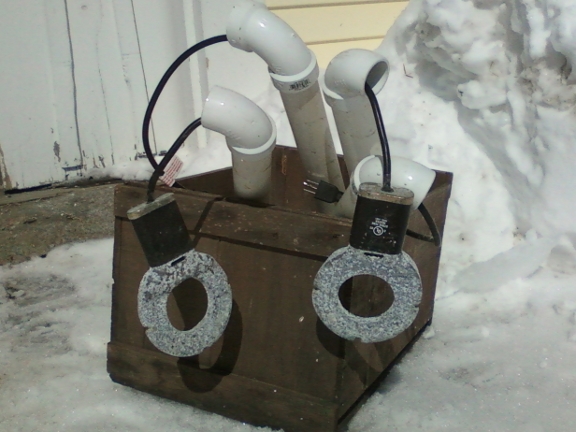 For the aeration system to work, more air would need to be used, which means more power, more electricity, more costs! And the motion of the water would probably be so intense that the horses would not want to drink from it anyway. And there is the question of whether they would drink the water if it were colder than a slush puppy?
 ....the warm weather was immediately followed by a wicked cold snap with temps dropping back into the single digits at night. During the transition from practically balmy weather to downright artic weather, I failed to take the little de-icer off the timer. Sure enough, it became imbedded in a couple inches of ice at the bottom of a trough. It took a long time before it was able to free itself clear of the ice and start working on the water again.
 Plan B - Continuous Movement Through ..... TBD
 After a relatively mild December, January has really provided a very sharp reminder of just how cold and snowy it can get in New Hampshire! And February is already looking to be just as wintery!
 Since we plow the pastures, the horses always have space to "graze" on their hay without stomping through deep snow. But even providing that luxury may become a challenge as the storms keep rolling in.
 It may have been a serious fashion faux pas, but it worked surprisingly well. My eyes were sufficiently protected. Watch. Flymasks will be all the rage next winter, on horses AND their owners! :-)
 By the end of 2010, Kearsarge Meadows lesson horse Piper Warrior and farm owner Kimberley had achieved their 2010 dressage goals, and then some. They made it to the 2010 USDF Region 8 Championships in 3 categories! And they finished 2010 with several National & New England Dressage Association (NEDA) year end awards, including:
 The 2010 NEDA Year End Championship for USDF Freestyles came with a massive championship ribbon and a gorgeous embroidered Mountain Horse jacket. Very nice!
 Anyone looking at Piper this morning would find it a little difficult to imagine the woolly black warmblood ready to compete again in four months time, but that is part of this year's game plan. Well, that's only if he does not sell before then. (Click here to view
 Trail Riding vs Hunting
 Winter is a great time to work on submission, suppleness, and lateral work. Since we allow our horses to develop their natural heavy winter coats, when we train, we do so in such a way as to avoid them getting sweaty and overheated. Cooling down a hot, wet, heavy coated horse is not easy nor fun.
 Each horse at our barn has its own saddle, which is fitted to the horse. While it would be seem to be much more economical to share saddles amongst horses, this proves to be a false economy when back issues occur due to poorly fitting gear.


 Closer to home, we feel the financial down turn as well. My former employer, Sun Microsystems, was bought out after way too many unprofitable quarters. Several rounds of layoffs impacted tens of thousands of employees across the globe. After 20 years of service, most recently as a Director, I was laid off as well.
